
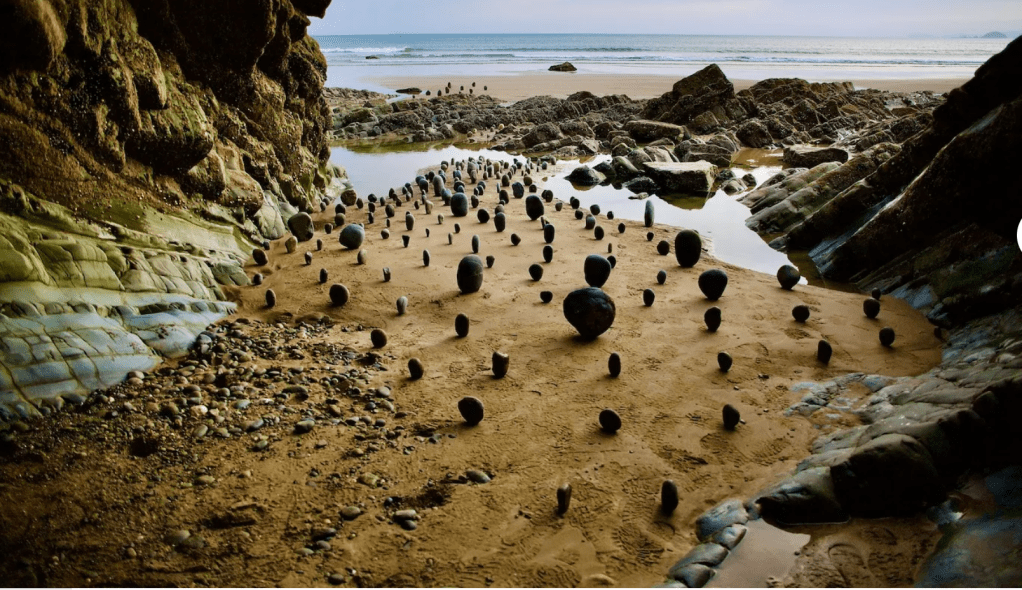
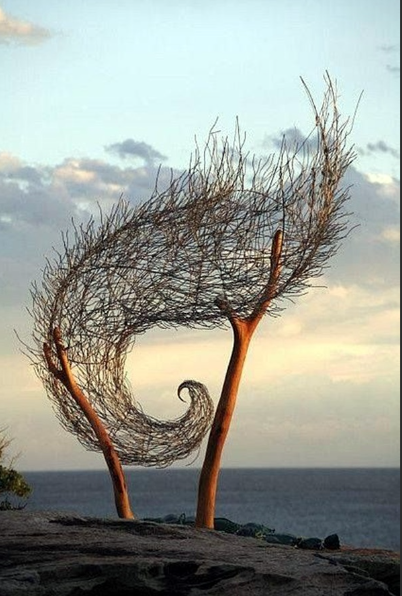
Earth art, also referred to as Land art or Earthworks, is largely an American movement that uses the natural landscape to create site-specific structures, art forms, and sculptures. The movement was an outgrowth of Conceptualism and Minimalism: the beginnings of the environmental movement and the rampant commoditization of American art in the late 1960s influenced ideas and works that were, to varying degrees, divorced from the art market. In addition to the monumentality and simplicity of Minimalist objects, the artists were drawn to the humble everyday materials of Arte Povera and the participatory “social sculptures” of Joseph Beuys that stressed performance and creativity in any environment.
The favored materials for Earthworks were those that could be extracted directly from nature, such as stones, water, gravel, and soil. Influenced by prehistoric artworks such as Stonehenge, Earth artists left their structures exposed to the elements. The resulting ephemerality and eventual disintegration of the works put them outside of the mainstream where works of art were typically coddled and protected in controlled environments.

The rejection of traditional gallery and museum spaces defined Earth art practice. By creating their works outside of these institutions, Earth artists rebuffed the commodity status these venues conferred on art, again challenging traditional definitions of art as something to be bought and sold for profit.
Earthworks are sometimes divided into those works that make great changes to the landscape and those that do not. Works in the former category generally require earth-moving equipment to make massive alterations to a site, such as Robert Heizer’s Double Negative (1969-70). Those works that are non-invasive and are seen as more respectful to the land include Richard Long’s A Line Made by Walking (1967), along with pieces by Andy Goldsworthy and Alan Sonfist.

Source: The Art Story


Leave a comment