
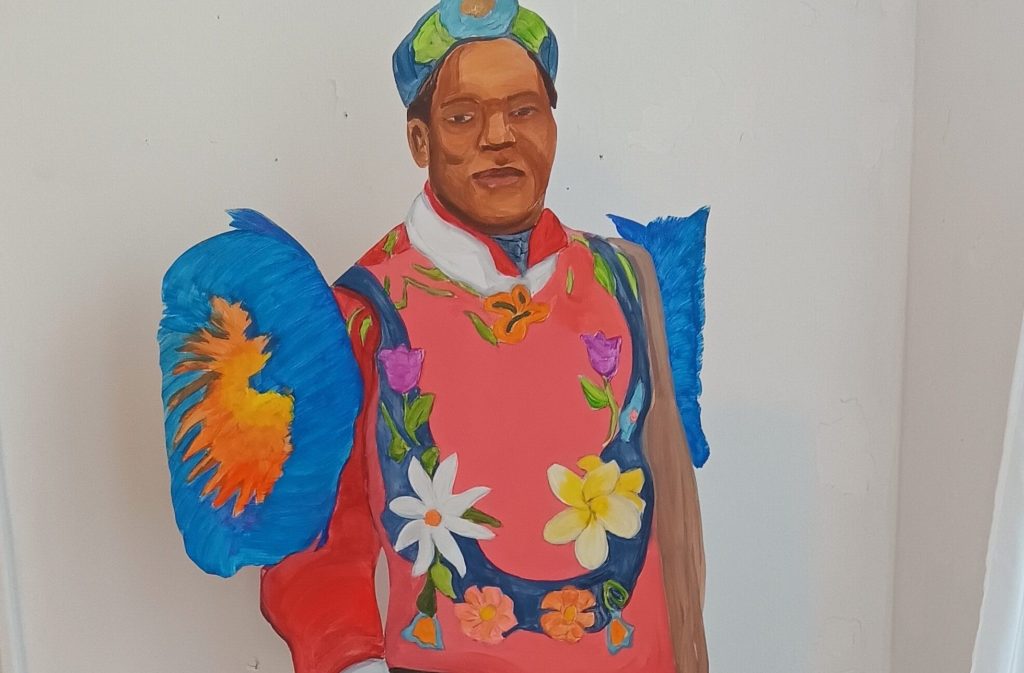
Dianne Hebbert takes us on a journey to her indigenous culture. Her family is from Nicaragua and she shares her traditions and heroes in several paintings that compliments the Native history on Governors Island and the site specific work of Elizabeth Knowles.
Corn, bean and squash were grown together as companion crops which sustained Native tribes along eastern region of North, Central and South America. Corn provided support for bean. Bean fixed nitrogen in the soil and squash would spread along the ground blocking sunlight to weeds. This practice of planting these crops goes back to the 1300s. When the Europeans arrived in the 1600s, they too followed the Natives and planted these crops.
The paintings speak on family, sustainability and pride. Come see the works in Building 10B, Nolan Park through August 30th.
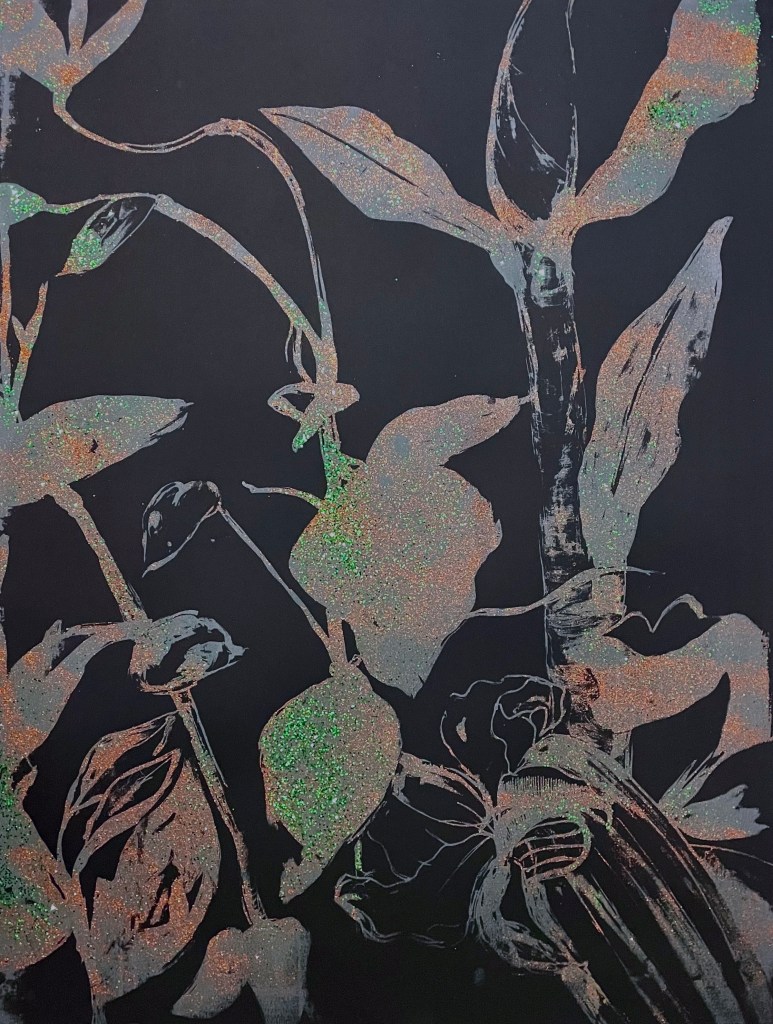
The Three Sisters print series are screen prints based on drawings of the three staples crops known as the three sisters – beans, squash, and corn
For the Leaders of Resistance
Flashe paint and gold leaf on frosted mylar, 77.25” x 24.5”
Photo credit to Etienne Frossard
This portrait is based on researched images of Nicarao, an indigenous chieftain who resisted the initial wave of colonizers in the 16th century in Nicaragua. The imagery is combined with traditional aboriginal ceremonial costumes from various tribes of different regions, including North, Central and South America. His cuff includes the triforce symbol or three scales symbol, which symbolizes power, wisdom and courage.

Matrilineal
Flashe paint and gold leaf on frosted mylar, Figure 1: 65” x 44” Figure 2: 55” x 37”
The imagery in this mother and daughter pair, depicted mid dance, combines traditional aboriginal ceremonial costumes from various tribes of different regions of North, Central and South America. Descendants are usually traced by the kinship of the mother’s line.
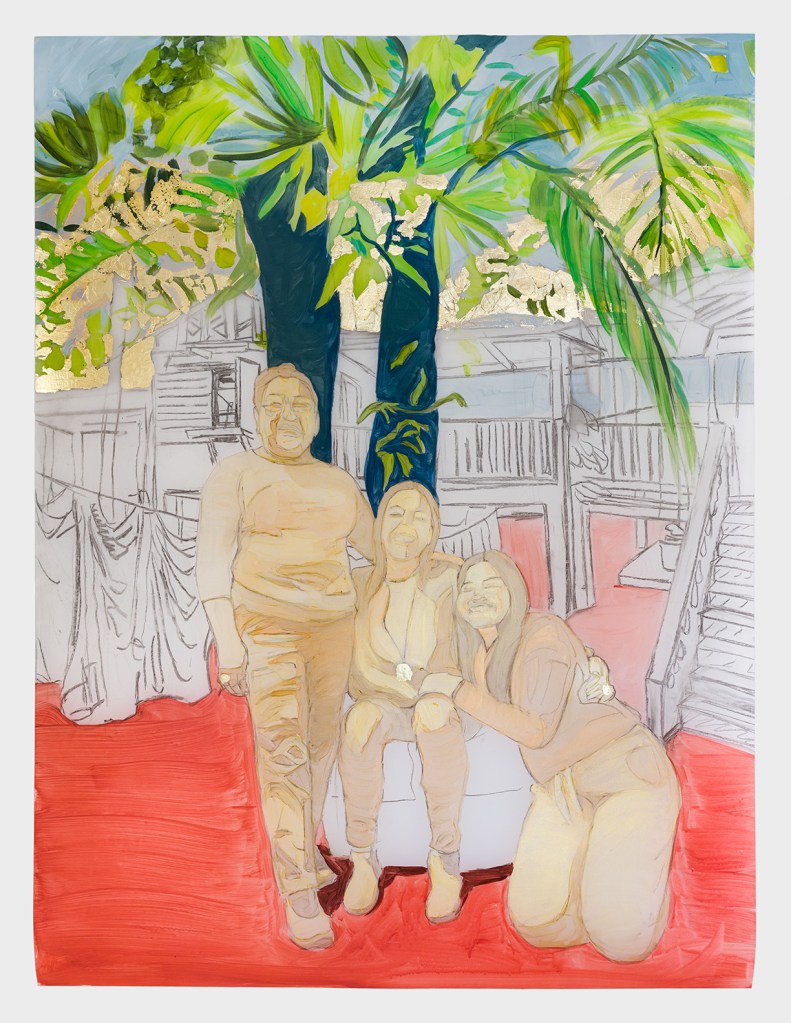
Image 1288: Generaciones de MiskitoFlashe paint and gold leaf on frosted mylar, 48” x 36”
Photo credit to Etienne Frossard
This portrait shows three generations of my family, descendants of the Miskito people. The background is of my grandparents’ home in Puerto Cabezas, Nicaragua. It includes a combination of foliage from Nicaragua and Miami, Florida, where I also have family.
Miskito are found on the Caribbean coast of Nicaragua and Honduras. Nicaragua was colonized by the Spanish and English, and as a result customs are different from coast to coast. Miskito people own our ancestral land, having been granted independence in 1987.
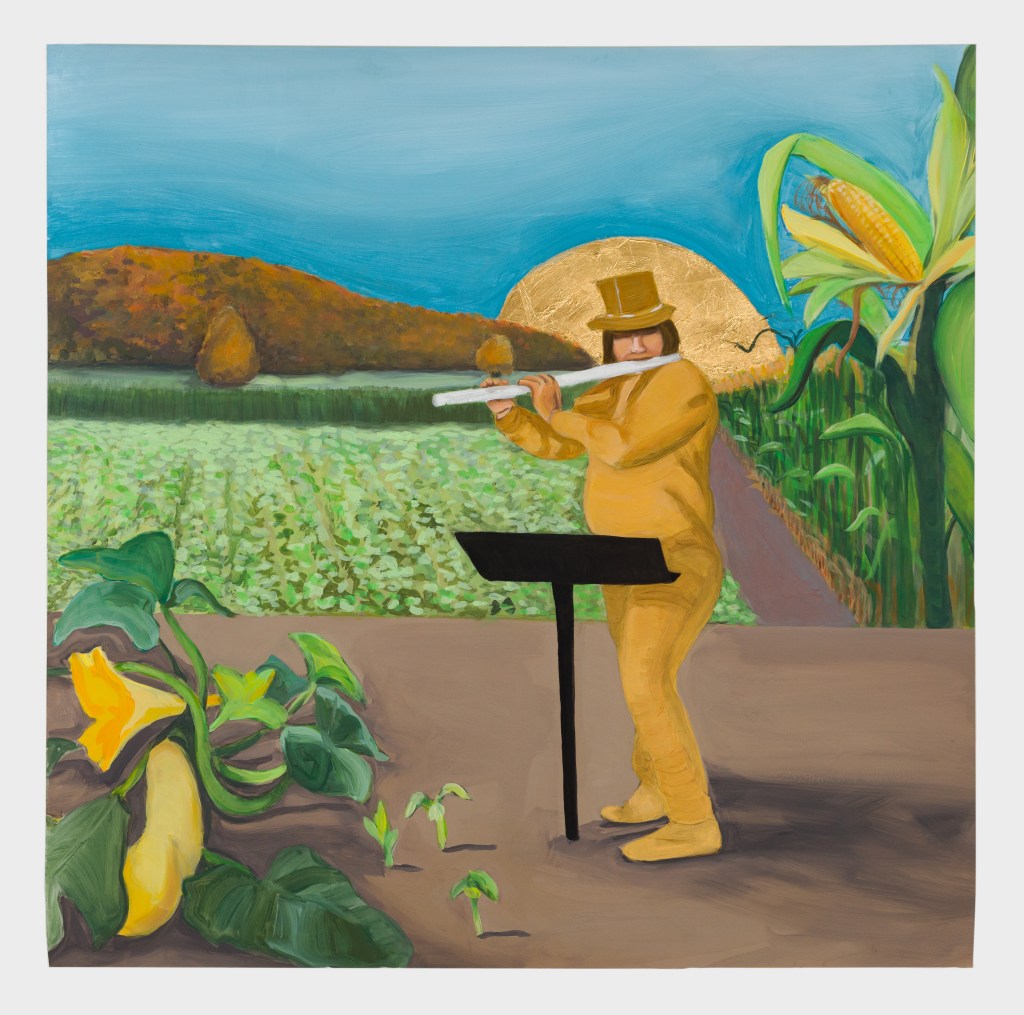
Image 1295Md: Brent Michael Davids Flashe paint and gold leaf on frosted mylar, 36” x 36”
Photo credit to Etienne Frossard
Brent Michael Davids is an award-winning composer and co-director of the Lenape center. He is an enrolled member of the Stockbridge-Munsee Band of the Mohican Nation. The landscape behind him is a combination of the Delaware river, Lenape land and paintings of the “three sisters” crops that were important to the Lenape people: corn, beans and squash.
Photo credit to Etienne Frossard


Leave a comment