
We now live in a new world that demands we communicate differently. The art community is responding with online sharing, talks and video conferencing. Here, we talk about the Blues and how it impacted Jazz. Please share your favorite Blues artist or song.
RAGTIME — A genre of musical composition for piano, generally in double meter and containing a highly syncopated treble lead over a rhythmically steady bass. A ragtime composition is usually composed three or four contrasting sections or strains, each one being 16 or 32 measures in length.
Ferdinand Joseph LaMothe, or better known as Jelly Roll Morton was an American ragtime and early jazz pianist, bandleader, and composer. In 1915, his song, “Jelly Roll Blues,” was the first published jazz composition. He is also known for naming and popularizing the “Spanish Tinge,” and for writing standards such as, “King Porter Stomp,” “Wolverine Blues,” and “Black Bottom Stomp.” He lived from 1890 to 1941.William Henry Joseph Bonaparte Bertholoff Smith, a.k.a “The Lion,” was an American jazz pianist and one of the masters of the stride style. He was born in 1893 and lived until April of 1973. He worked in Harlem clubs for a large part of his life. He was often a soloist playing songs such as, “Maple Lear Rag.” Other hits of “The Lion” were “Echoes of Spring,” “Finderbuster,” and “Fading Star.”
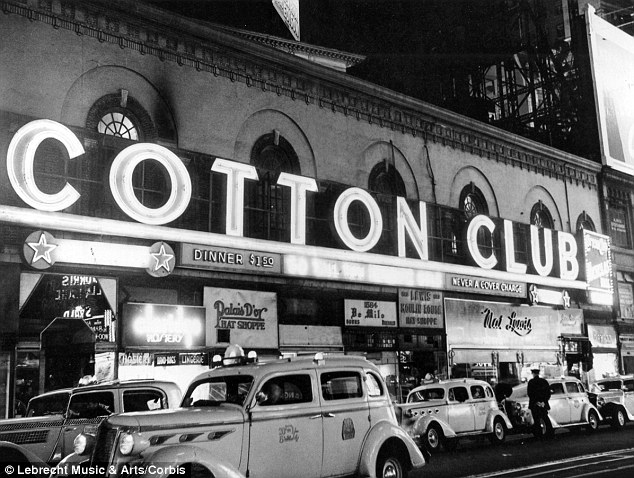
New York City contributed to the richness of jazz in many ways. The first piano style to be incorporated into jazz was “Harlem Stride” which was created during the Harlem Renaissance and helped to “blur the lines between the poor Negroes and socially elite Negroes.” The traditional jazz band was composed primarily of brass instruments and was considered a symbol of the south, but the piano was considered an instrument of the wealthy and with its use, wealthy blacks felt that jazz music was more acceptable. During this time experimentation and improvisation created many off-shoots of music with jazz as its basis. As jazz evolved, highly arranged music became the norm. When white musicians like Benny Goodman added black arrangements for their scores, jazz began to move into the Swing or Big Band period. Large black and white jazz bands toured the United States filling the radio airwaves with swing, a term which became synonymous with jazz.
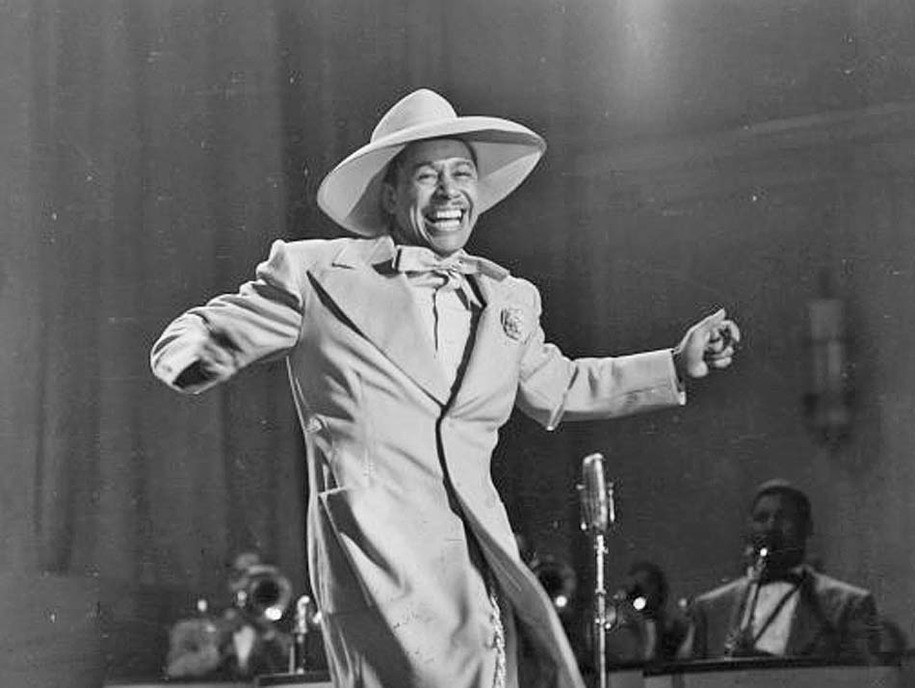
Although the jazz music was played mostly by African Americans, the clubs they were performing in were not so racially friendly to customers and other workers. The club was created with the idea to make “a stylish plantation environment for its entirely white clientele.”
The Cotton Club originally excluded all but white customers, although the majority of the performers and staff were African American. The dancers were held to a very strict standard and were required to be under 21 years old, light skinned, and at least 5’6” tall. The music here was instructed to be played to give a jungle like atmosphere to portray the African American employees as plantation residents or exotic savages. Although the majority of the population in the Cotton Club was African American and the music would not be possible without them, the club was extremely segregated and oppressive. Jazz music was bringing together the races, only to segregate them when they got together.
Carnegie Hall was another music hall that was popular for jazz music during this period. It was home to hundreds of jazz concerts by famous artists such as Ella Fitzgerald, Miles Davis, Louis Armstrong and Duke Ellington. Early jazz was first heard here in 1912, becoming one of the first places in the city to go and listen to the newly emerging genre. Carnegie Hall is still in use today and has withstood the test of time as a prestigious music venue.
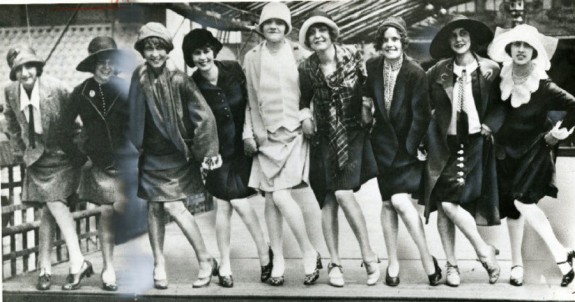
The jazz age was also a time for new fashion, especially for women. The flapper style became very popular starting in the 1920s. Women began cutting their hair short into bobs, wearing shorter skirts that showed their legs, wearing more makeup, and high-heeled shoes. Being a flapper was not all about the clothes, but also their state of mind. In the April 16th, 1922 issue of the New York Times, a flapper “dresses simply and sensibly, and looks life right straight in the eye; she knows just what she wants and goes after it, whether it is a man, a career, a job, or a new hat.”This new type of woman pushed the boundaries and challenged the sexual standards of the times. Women were no longer submissive to the men in their lives and were not afraid to have fun. Flappers would go to dance clubs and dance until the wee hours of the morning. They would spend their time with men drinking and socializing in speakeasies while listening to jazz. The changing times came with changing standards for women and gave them more freedom. If it wasn’t for the brave flappers who changed the rules, women would not be where they are today.
Overall, the Jazz Age in New York City was a time of change and advancement. The music scene was changing with the emergence of jazz into popular culture. This music was played by African American musicians in places such as the Cotton Club and Carnegie Hall. While the African American musicians were in the spotlight, their business was not welcomed as patrons. These jazz clubs were segregated and only white clientele were welcome to see the show. Besides the jazz clubs, New Yorkers also passed their time by going to speakeasies to drink illegal alcohol. Prohibition was in place during this time period, so the only way to get alcohol was to go to a secret club. These secret clubs were also hot beds of mob activity. The mob was very active during the jazz era and gangsters used prohibition to their advantage. For example, famous gangster Owney Madden was the owner of the Cotton Club and used the club to sell his “#1 Beer.” The Back Room was also used by many gangsters such as Meyer Lansky, Lucky Luciano and Bugsy Siegel used this space for “business meetings.”The gangsters preferred this speakeasy due to its multiple exits onto different streets. If there was a hit going on, or a raid, it was very easy for the gangsters to make a quick getaway through one of the many entrances. From flappers, to gangsters, to jazz musicians, the jazz age in New York City has a colorful history. A tour around New York City with visits to the Backroom, The Cotton Club, and Carnegie Hall, will instantly transport you back to the opulent 1920s and early 1930s.

