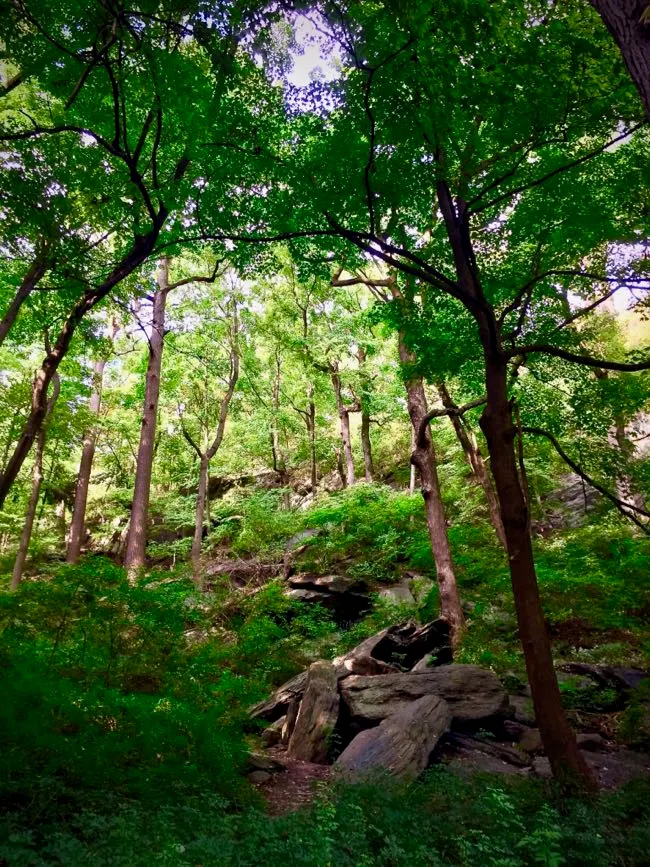
Today, we begin our mapping journey. It will start at St. Nicholas Park on the edge of Central and West Harlem. The City does not compile comprehensive maps of their local parks. And many historical maps are lost as well. We will show you where the invasive plants, trees, and shrubs are located. From that information, we can integrate data from the Trees Map and consider other conditions.
Caring for nature is powerful. Tapping into an energy that transcends place and time offers peace and a space for healing. People of color though, are discouraged from engaging in nature. We are told in so many ways to get out. I am determined that the Black and Brown people of Harlem and Washington Heights can engage in nature for their own benefit and not be told to just “clean up” or “get out”.
As we collect this data, we could spot climate change impacts like soil erosion or compaction. This process can help determine a plan for research, removals, and plantings.

We also know there are animals in the park. This week we saw an albino raccoon. Can you imagine. It felt safe enough to come out and look at us. We were dumbstruck. We saw this creature moving around us like it was normal. Then we saw two feral cats, two blue jays, and then a cardinal. It was dancing in front of us on the asphalt path.
Why shouldn’t we enjoy plants, trees, or animals that don’t care what we look like but can sense we will not harm them? Why shouldn’t we enjoy a beautiful sunset or hear the sounds of the river or the calls of large birds?
Savona Bonita Bailey-McClain, Executive Director, West Harlem Art Fund
Leave a Reply